Football shirt numbers are far more than simple identifiers — they are woven into the game's identity, history, and mythology. Introduced to help spectators and officials distinguish players, they quickly became tied to on-field roles, from the goalkeeper's number 1 to the iconic attacking symbolism of 9 and 10. As rigid positional systems gave way to squad numbering, numbers evolved into vehicles for personal expression, superstition, and branding. They also developed a visual language of their own, rendered in font styles shaped by leagues, manufacturers, and eras — from functional block designs to ornate, futuristic, and club-specific typefaces.
The examples shown here invite closer appreciation: shirt numbers presented almost as works of art in their own right — isolated figures with distinct identity, character, and form, where function meets graphic design in one of football's most enduring visual signatures.
With thanks to Graham Sibley, Carlos E. Esquivel Ortiz and Yvain Spresni for their nominations.

Borussia Mönchengladbach 
1976

Canada 
2026 World Cup

Denmark 
1986
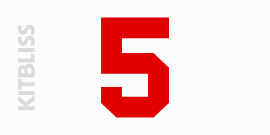
England 
1982 World Cup

England
2000
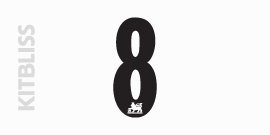
English Premier League
1996-2007

International Generic 
1960s to 1990s

Italy 
1978 World Cup

Luton Town
1975-76

Manchester United
1982-84

Mexico
1970 World Cup

Netherlands 
1974

Poland
1973

Real Madrid 
2002-03

Switzerland 
1980-1990s

Tottenham Hotspur
1980-81

Yugoslavia 
1974 World Cup